
Certified Desert Guide
Professional Certification in Guiding Long-Distance Routes in the Israeli Desert
Planning | Navigation | Logistics | Group Leadership | Risk Management
Language of instruction: The official language of the program is Hebrew, with English-language support available throughout the course.
Program Objectives
This program equips participants with the knowledge and practical skills required to safely and professionally guide groups on long-distance routes in the Israeli desert. It combines route planning, field logistics, advanced navigation, group management, and informed decision-making in challenging desert environments.
Target Audience
The program is intended for those who aspire to professionally and responsibly guide groups on long-distance routes in the Israeli desert.
It is designed for individuals seeking to build a career in the field—as group guides, leaders of hiking programs, outdoor workshops, and field experiences for organizations, or professionals in the adventure and desert tourism sectors. It is also well suited for those who already lead groups in community or informal educational settings and wish to develop the professional knowledge and skills required to guide in desert environments.
Contact Information
For questions or additional details about the program, please contact:
Phone: +972-54-8175140 or Whatsapp
Email: [email protected]
Register by July 31, 2026 and receive a ₪350 early registration discount.
For additional information, please contact the University of Haifa School of Tourism at +972-4-8240438, or reach us via WhatsApp.
Background
In recent years, Israel has seen significant growth in long-distance desert travel, including hiking, fastpacking, trail running, desert races and high-tempo day expeditions. Advances in digital navigation, the expansion of the national trail network, and the widespread adoption of ultralight equipment have made these activities more accessible and contributed to a growing number of groups exploring the Israeli desert.
This growing interest in desert travel is driven not only by the physical challenge, but also by a desire to build mental resilience, improve focus, and promote overall well-being. Understanding these motivations is an important part of creating meaningful and rewarding long-distance desert experiences.
The program was developed in response to the growing demand and expanding career opportunities in desert tourism and outdoor adventure. It is the first professional certification program in Israel dedicated to guiding groups on long-distance desert routes, combining academic knowledge in exercise science with extensive practical training in planning and leading groups on extended desert journeys.
The program focuses on developing the professional knowledge and practical skills required to guide groups safely and responsibly on long-distance routes in the Israeli desert using a lightweight approach. Emphasis is placed on pace and workload management, decision-making in dynamic desert conditions, route planning, navigation, and the safe leadership of extended desert journeys - from the initial planning stage through on-the-ground group management.
What Makes Desert Guiding Different?
The desert presents a unique operating environment that requires far more from a guide than simply knowing the route. Distances are long, water sources are limited, temperatures can be extreme, and access to emergency assistance is often restricted. As a result, every decision - from route planning to managing the group's pace - has a direct impact on both safety and the overall success of the journey.
A desert guide must integrate navigation, field logistics, water and energy management, risk assessment, and group leadership while adapting to constantly changing conditions in the field. It is a distinct professional discipline that combines technical knowledge, sound judgment, and responsibility, extending well beyond traditional hiking or trekking leadership.
What Makes This Program Unique?
Israel's first and only professional certification program dedicated to guiding groups on long-distance routes in desert environments.
A specialized focus on extended journeys deep in the desert, rather than short recreational hikes or family outings.
A research-based curriculum integrating the latest knowledge from exercise science and health sciences.
Competency-based certification built around practical field performance and real-world application.
A dedicated focus on the Israeli desert, its unique environment, challenges, and guiding practices.
Program Structure & Curriculum
The program consists of 140 academic hours, including 60 hours of online instruction and 80 hours of practical field training.
The curriculum is delivered in two complementary components:
Weekly online lectures (Zoom)
Eight intensive field training days
Online Instruction (Approximately 60 Academic Hours)
A. Route Planning & Navigation
Planning long-distance desert routes: methodology and practical tools
Topographic map reading and the geography of Israel's desert regions
Weather forecasting for desert travel
Traditional and digital navigation techniques
B. Exercise Physiology & Performance
Endurance and strength training
Exercise physiology for prolonged activity in hot environments
Energy management, pacing, and pack weight
Ultralight equipment, nutrition, and clothing for long-distance travel
C. Safety & Risk Management
Heat stress, dehydration, and common field injuries
Night travel and flash flood awareness
Principles of wilderness rescue
Decision-making in technical terrain
D. Group Leadership & Resilience
Participant briefing and expectation management
Group dynamics during extended journeys
Guide responsibilities and risk assessment
Nature, mental well-being, and resilience
Practical Field Training (Eight Field Days | Approximately 80 Academic Hours)
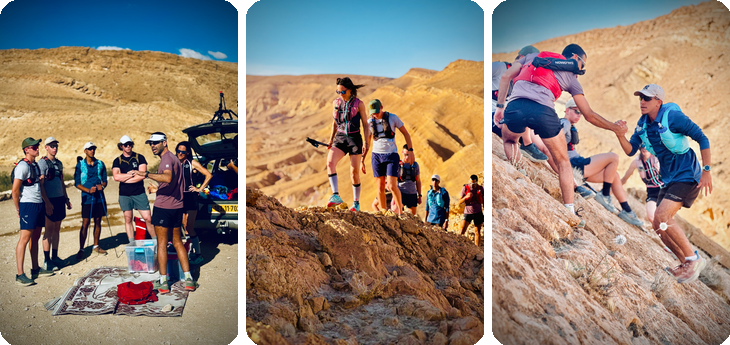
Practical training across Israel's diverse desert regions
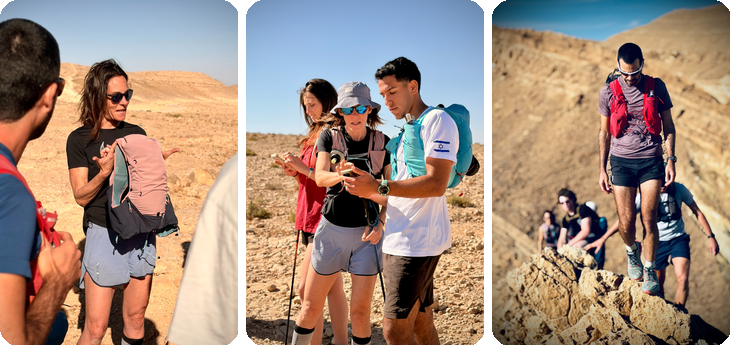
Advanced desert navigation using both traditional and digital techniques
Efficient movement in desert terrain and group pace management
Route logistics, including water planning, daylight management, and water cache planning
Leading groups through technical terrain and changing environmental conditions
Workload management, trekking pole techniques, and ultralight equipment
Nutrition strategies for long-distance routes
Safety scenarios and decision-making in dynamic field conditions
Pre-trip preparation, including participant briefings, expectation management, and group organization
Planning and leading a long-distance desert route, including a comprehensive practical assessment
Program Schedule
Program Begins: November 4, 2026 | Program Ends: February 24, 2027
The online component of the program is delivered via Zoom through weekly evening sessions held on Wednesdays from 6:00 PM to 9:00 PM (Israel Time). The curriculum includes 15 online sessions, totaling 60 academic hours. The first online session will take place on Wednesday, November 4, 2026.
Field training is integrated throughout the program and is generally held on Sundays, with no activities scheduled on Fridays or Saturdays (Shabbat). The practical component combines individual training days with intensive multi-day field modules.
Field Training Schedule
Sunday, November 15, 2026
Judean Desert – Movement techniques, equipment, and pace management
Sunday–Monday, December 13–14, 2026
Negev Highlands – Fundamental navigation and terrain interpretation
Sunday–Monday, January 10–11, 2027
Judean Desert – Advanced navigation, safety, and logistics for extended desert travel
Sunday–Tuesday, February 21–23, 2027
Arava – Group leadership, group dynamics, and decision-making under physical and environmental stress
The final practical assessment will take place during March 2027. The exact date will be scheduled individually based on the availability of both the participant and the accompanying client.
Admission Requirements
Ability to hike approximately 15 km (9 miles) per day over varied desert terrain.
18 years of age or older.
A medical clearance form signed by a licensed physician.
A personal interview to assess the applicant's suitability for the program, learning potential, and sense of responsibility for the safety and well-being of others.
The program is open to applicants regardless of prior academic qualifications or guiding certifications. All academic sessions are conducted online, and no attendance on the University of Haifa campus is required.
Certification Requirements
Participants who successfully complete the program will receive the Certified Desert Guide: Professional Certification in Guiding Long-Distance Desert Routes, awarded by the University of Haifa School of Tourism.
To qualify for certification, participants must:
Maintain a minimum 80% attendance rate.
Successfully complete the mid-program assignment, which includes designing a guided field day incorporating route planning, participant briefing, logistical planning, and risk assessment.
Successfully pass the final practical assessment, demonstrating the ability to safely and professionally lead a group on a long-distance desert route under faculty evaluation.
Successfully complete the 44-hour First Aid Provider (FAP) certification, delivered through Magen David Adom (MDA) in a blended format, including online coursework and an in-person practical assessment.
Certification is awarded based on a professional evaluation of each participant's ability to plan and lead groups safely, responsibly, and effectively in the desert environment.
Program Faculty
Program Director
Professor Sharon Sznitman
Head of the Master of Public Health (MPH) Program in Physical Activity and Health, School of Public Health, University of Haifa.
Lead Instructor
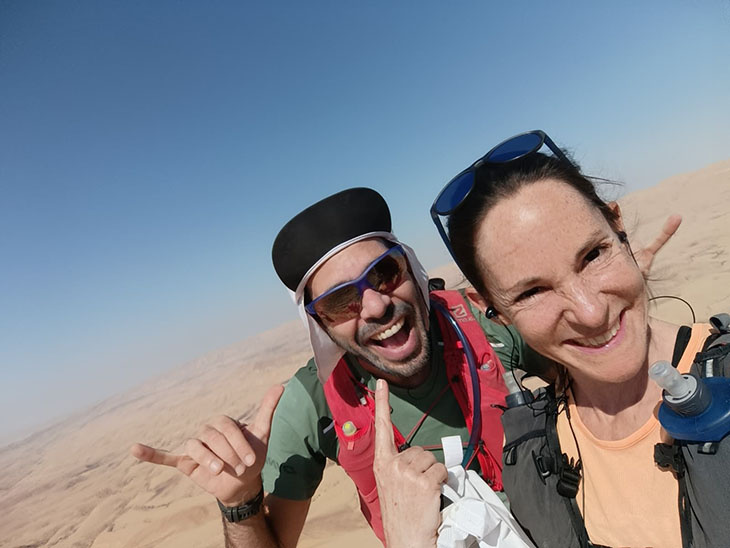
Eliya Zemmour
Certified Trail Running Coach, outdoor educator, and author of 50 of the Most Beautiful Routes in the Israeli Desert.
Tuition
Program Tuition: ₪9,250
The tuition fee is ₪9,250, plus a non-refundable registration fee of ₪350. The registration fee is not refundable if an applicant cancels their enrollment.
Early Registration Discount:
Applicants who register by July 31, 2026 will receive a ₪350 early registration discount.
Career Opportunities
The program is designed not only to deepen your knowledge and field experience, but also to prepare you for professional opportunities in desert guiding, outdoor leadership, and adventure tourism.
Graduates will be equipped to lead groups on long-distance routes in the Israeli desert, facilitate outdoor workshops and challenge programs, work with hiking and trail running communities, contribute to non-formal education and experiential learning initiatives, collaborate with organizations and companies, and develop independent ventures in adventure and desert tourism.
The program is equally valuable for those who already lead groups in community or informal settings and wish to build a solid professional foundation, as well as for those looking to turn their passion for the outdoors, the desert, and long-distance travel into a meaningful career.
Career Pathways
Guiding groups on long-distance desert routes
Leading outdoor workshops and challenge programs
Designing and delivering outdoor experiences for organizations and companies
Outdoor leadership in non-formal education programs
Leading hiking and trail running communities
Careers in desert and adventure tourism
What Our Graduates Say
Daniel Naor
"I came into the program with plenty of field experience, but without a clear methodology. What I gained was a structured way of thinking—from the initial planning stages all the way to completing the route. I learned how to lead groups professionally, with confidence instead of improvisation. It has completely changed the way I guide today."
Bruno Sutnik
"Before the program, I would lead friends and small hiking groups, but I was never completely confident in my decisions. The training gave me real confidence, especially when it comes to making decisions in the field. Today, I feel much more capable and intentional in the way I lead."
Dr. David Immanuel
"I've always been drawn to the desert, and at one point I decided I wanted to become involved in Israel's desert tourism industry. This program gave me the professional tools I needed—not only for planning and logistics, but also for understanding what people are truly looking for in the desert: quiet, vast open landscapes, and a sense of purpose through the journey itself."
Language of Instruction
The program is conducted primarily in Hebrew.
Participants whose native language is not Hebrew will receive support from the instructional team throughout the program. Practical field instruction can be provided in English when needed, and English-language clarification will be available during both field sessions and online classes.
To support non-Hebrew speakers, the following accommodations are available:
Field instruction in English: Practical field sessions can be conducted in English when needed. The instructional staff will ensure that all essential explanations, guidance, and safety briefings are provided in English.
Recorded lectures with subtitles: All online lectures are recorded and can be reviewed at your own pace with subtitles.
Assessments in English: Both the mid-program route planning assignment and the final practical assessment may be completed in English.
Program materials in English: All required reading materials and course resources are available in English.
English-language support throughout the program: Participants are encouraged to ask questions in English whenever clarification is needed. Our goal is to ensure that every participant feels comfortable and fully supported throughout the program.
Travel Requirements for International Participants
We recommend that international participants remain in Israel throughout the semester to fully immerse themselves in the program and the local outdoor community. Participants who choose to travel to and from Israel between field modules should plan for up to four separate visits to Israel, allowing sufficient time for international travel and for preparation before and after each field module. In addition, certification includes a separate final practical assessment in Israel and the successful completion of a mandatory 44-hour First Aid Provider (FAP) certification, available in English through a recognized Israeli provider and including an in-person practical assessment in Israel.
Articles & Publications
We spend a lot of time in the desert - trail running, paragliding, hiking, and guiding groups. Along the way, we've also had the opportunity to write about these experiences. Here are a few articles on the desert, ultralight travel, and long-distance movement:
Frequently Asked Questions
Do I need previous experience?
Participants should have basic hiking experience and be comfortable completing hikes of approximately 10–15 km (6–9 miles). Previous professional guiding experience is not required.
How physically demanding is the program?
The program includes extended days of hiking in desert environments and therefore requires a good level of physical fitness and the ability to sustain prolonged physical activity. However, this is a professional training program, not a competitive or extreme endurance event.
Is the program suitable for someone who is not currently a guide?
Yes. The program is designed not only for those already working as guides, but also for individuals who currently lead friends, community groups, or informal outdoor activities and wish to develop professional guiding skills.
What level of fitness is required?
Participants should have a good level of hiking fitness and basic experience hiking in natural terrain. You do not need to be a competitive athlete, but you should be capable of completing long hiking days in desert terrain while carrying your personal equipment.
As an admission requirement, applicants must be able to comfortably complete a hike of approximately 15 km (9 miles) over varied terrain.
Most participants naturally improve their fitness throughout the program as part of the practical training. However, arriving with a solid aerobic base and a willingness to take on physical challenges is strongly recommended.
If you are unsure whether your fitness level is suitable, we encourage you to contact the program team before applying.
Where does the program take place?
The academic component is delivered online via Zoom on Wednesday evenings.
The practical component takes place in the Judean Desert, the Arava, and the Negev Highlands. For detailed dates and locations, please refer to the Program Schedule section.
What if I cannot attend one of the sessions?
Regular attendance is an essential part of the professional training, particularly during field exercises and practical workshops.
If you need to miss a session, alternative arrangements may be considered on a case-by-case basis, depending on the nature of the session and at the discretion of the instructional team.
A minimum 80% attendance rate is required for certification.
What equipment is required?
Participants should have the basic equipment needed for hiking and overnight stays in the field. Some of the recommended equipment follows ultralight principles for efficient long-distance travel.
A detailed equipment list will be provided before the program begins.
Are there overnight field trips?
Yes. Overnight stays are an integral part of the practical field training.
Accommodation will typically be at organized desert camps, khans, or other designated desert lodging facilities. Depending on the location, participants may choose between camping in their own tent or using the accommodation available at the site.
As a general rule, the facilities include restrooms, showers, and a shared field kitchen.
Can I work or study while participating in the program?
Yes. The program is specifically designed to accommodate participants who are working or studying. Online classes are held in the evenings, and field training dates are scheduled well in advance.
Do I need a car?
A personal vehicle is recommended, but it is not required.
Participants commonly coordinate carpools to and from the designated meeting points for field training.
How much equipment will I need to carry?
The program emphasizes lightweight travel and the principles of ultralight equipment for long-distance desert travel.
Accordingly, participants are expected to carry only the equipment necessary for efficient movement over extended distances—not the heavy loads typically associated with expedition-style trekking.
Is the program insured?
All program activities are conducted within an organized and insured framework in accordance with the policies and procedures of the University of Haifa School of Tourism.
Will I receive a certificate?
Yes. Participants who successfully meet the program requirements, attendance requirements, and practical assessment standards will receive the Certified Desert Guide certificate awarded by the University of Haifa School of Tourism.
The program provides a professional certification in guiding long-distance desert routes and leading outdoor challenge programs. However, it does not replace any licenses or certifications that may be required by law for specific guiding professions or regulated activities.